
Serial killers represent a tiny fraction of all homicides each year, yet their stories seem to captivate our collective consciousness more than other crimes. Dr. Kanika Bell, a psychologist and Associate Professor at Clark Atlanta University, offers insight into this phenomenon.
In a discussion with Oxygen.com, Bell noted that people are generally uninterested in run-of-the-mill murders, such as those stemming from road rage.
“We are fascinated by the one person who is committing ritualistic acts, who is planning, who is returning to daily life as a husband, as a parent, going to work in between kills,” she explained.
Bell has delved into whether these behaviors could be lurking within families, particularly through her involvement with the Oxygen series ‘Killer Siblings,’ which examines cases of relatives who have taken a dark turn.

A recurring theory in both fictional and real criminal cases involves a gene mutation known as MAOA, dubbed the ‘warrior gene.’ This mutation, more prevalent in males, has surfaced in court cases and pop culture scenarios as a potential explanation or scapegoat for violent or antisocial behavior.
However, Bell suggests that our obsession with this gene reflects a deeper quest to make sense of the inexplicable rather than offering a scientific explanation.
“We don’t understand why someone would ritualistically choose innocent persons and butcher them, sexually assault them, and maim them in the ways that serial killers do,” she stated. “I think we are thirsty and looking for something to explain that phenomenon.”

Bell remains skeptical that a single gene could account for the full spectrum of violent behavior in convicted killers. She emphasizes environmental influences, such as family dynamics and childhood experiences, as more critical factors.
“We are normally looking at psycho-social, familial dynamics that contribute to, you know, someone developing the capacity to commit acts like those,” she noted.
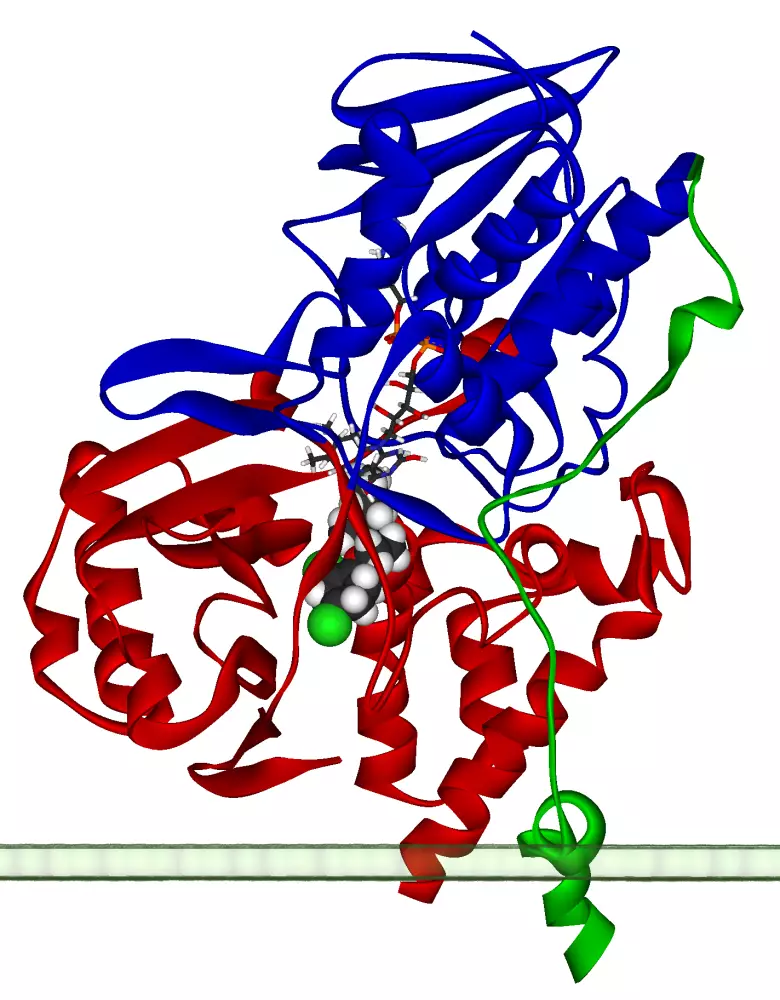
The MAOA gene is responsible for producing an enzyme called monoamine oxidase A, which breaks down certain brain chemicals after they’ve served their purpose. These neurotransmitters include serotonin, dopamine, and adrenaline compounds, all crucial for regulating mood, emotion, sleep, appetite, and stress response. The enzyme acts like a clean-up crew, maintaining balance by clearing these messengers once they’ve completed their task.
Mutations that interfere with this process can lead to a condition called monoamine oxidase A deficiency, primarily affecting males, and associated with mild intellectual disability and behavioral issues, such as aggressive outbursts.
When the enzyme malfunctions, neurotransmitters like serotonin may accumulate in the brain instead of being properly cleared, potentially causing impulse control issues and aggressive behavior.

There is also a theory that a compound called tyramine, found in foods like cheese, could exacerbate symptoms, which might explain why dietary choices sometimes influence behavior.
Despite the mutation, violent tendencies are far from a certainty. Bell emphasizes that possessing the gene does not predetermine one’s fate.
For some, however, the fear of inheriting violent traits is palpable. Bell has encountered clients with violent family backgrounds who choose not to have children, fearing genetic transmission.
“It’s difficult to try to reassure someone, when someone has a violent parent and a violent sibling that, you know, hey, there’s a possibility you’ll have really great kids, that this won’t come down as a genetic pathway,” she commented.
Bell also noted that current research doesn’t support the notion that violent predispositions are passed down as predictably as physical traits like eye color.
“I do think that sometimes people believe that it has that level of genetic power and I just don’t think we’ve had studies that show that kind of genetic marker at this time,” she concluded.