
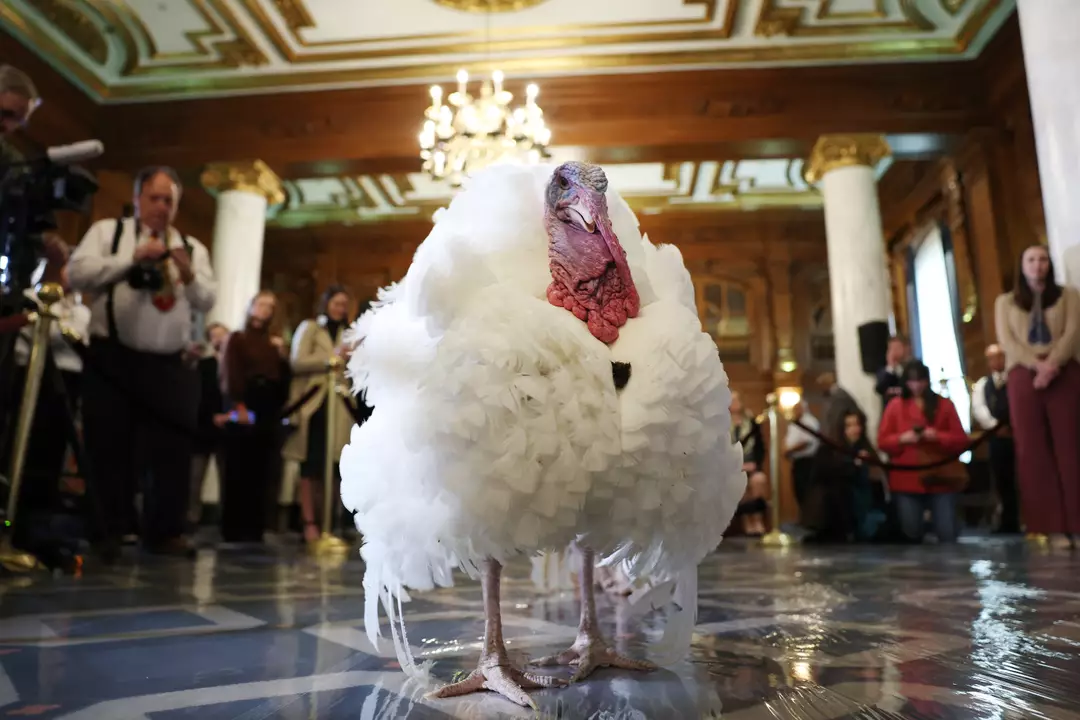
Cooking a turkey is often a significant culinary task, with several pitfalls to avoid. While Donald Trump pardoned Waddle and Gobble, sparing them from the Thanksgiving table, many turkeys across the United States are not as fortunate. Once plucked and prepared, a turkey poses a cooking challenge due to its size.
Without proper technique, the bird’s exterior may end up dry while the interior remains undercooked. Regular basting can help maintain moisture on the outside, but there’s a common mistake that should be avoided, as advised by an expert. This isn’t about the risky act of deep-frying a turkey over a gas burner – that’s another hazard altogether.
Instead, the focus is on the practice of washing your turkey before cooking. Although some believe rinsing the bird removes bacteria, this step is unnecessary and potentially dangerous. Proper cooking temperatures will effectively eliminate bacteria, whereas washing the turkey could spread germs by splashing contaminated water around your kitchen.
This becomes crucial if you’re also preparing uncooked or cold items like salads or dips. The Centers for Disease Control (CDC) warns that “washing raw turkey can spread germs to other food” and advises against washing poultry since 2005.
One water-related method you can use with turkey is brining. This technique involves immersing the turkey in a saltwater solution—5g of salt per 100ml of water. Flavor enhancers such as lemon slices, peppercorns, bay leaves, and fresh garlic can be added to the brine. After creating holes in the turkey with a knife, submerge it in the brine for at least 24 hours, though 36 to 48 hours is optimal for a large bird. Brining not only tenderizes and seasons the meat but also helps prevent it from drying out during cooking. If excess moisture is a concern, pat the turkey dry with kitchen paper before roasting.