
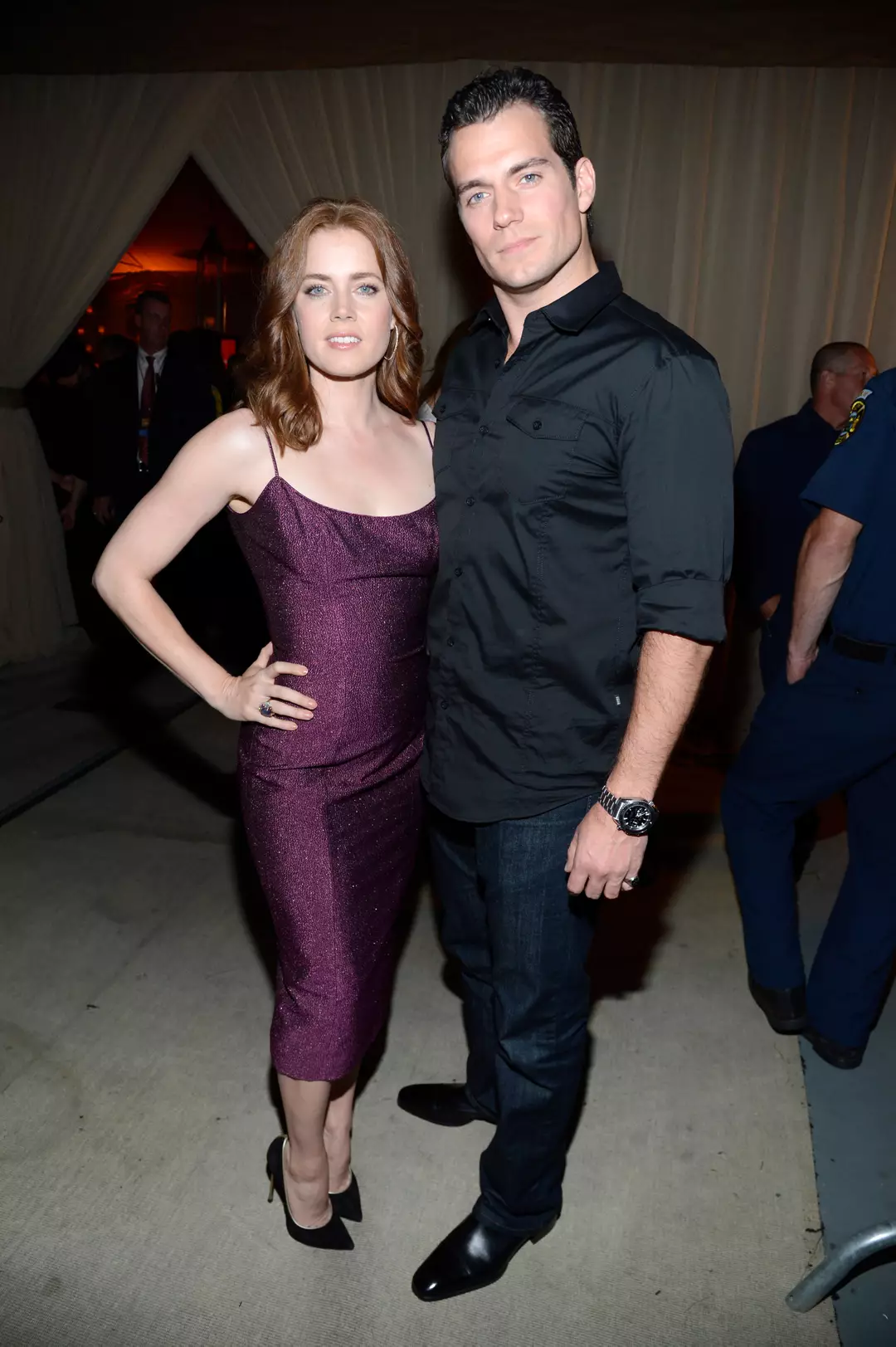
Henry Cavill has confessed that sharing a kiss with his Man of Steel co-star Amy Adams was somewhat ‘too much’.
Cavill is undoubtedly a talented and entertaining actor who, for many around the globe, epitomizes Superman – even if the movies starring the iconic character didn’t top the box office charts in those years.
Although much attention has been given to Cavill’s notable performance in The Witcher, there are other films he’s been a part of that have sparked conversations for entirely different reasons.
One such film is the 2013 release Man of Steel, in which Cavill and Adams’ characters shared a notably passionate kiss.
During an appearance on the BBC’s The Graham Norton Show, Adams shared that she learned a specific ‘tongue’ technique from director David O. Russell while working on The Fighter.
She explained: “David O. Russell has a thing with tongue, okay? He likes to see it, like a 1980s music video or something. I tried that with Henry, it didn’t work! They were like, ‘Ew, what’s that?'”
Cavill concurred with Adams, acknowledging that the kiss was ‘too much’.
“I was such a creeper for poor Henry,” Adams humorously remarked. She added: “Like I know it’s all you know, but I talked to other people like, ‘Oh, Henry is beautiful, he’s such a nice guy’, but then you say it in front of him and then you feel really creepy.”
Despite the slightly awkward filming moment, Adams has often praised Cavill, calling him the ‘nicest person’.
“He’s the nicest person on top of being just a wonderful actor and wonderful looking,” she previously shared with OK! magazine.
“He’s also got this great humility and he does a really great job in the role. He’s got a great sense of humour, but he’s not cheeky at all, so… I kind of wish he’d misbehaved!”
Cavill has previously spoken about intimate scenes in his projects, mentioning on the Happy Sad Confused podcast that sometimes a sex scene can genuinely benefit a film.
According to the Express, the 42-year-old elaborated: “There are circumstances where a sex scene actually is beneficial to a movie, rather than just the audience. I think sometimes they’re overused these days. It’s when you have a sense that you’re going, ‘Is this really necessary, or is it just people with less clothing on?
“That’s when you start to get more uncomfortable and you’re thinking, ‘There’s not a performance here. There’s not a piece which is going to carry through to the rest of the movie.'”