
The eventual end of all life on Earth is a certainty, with our society’s achievements destined to become mere relics over time, and scientists have proposed when this ultimate event might occur.
Contrary to the asteroid impact that led to the extinction of the dinosaurs, eliminating 75 percent of all species, the predicted demise of life on Earth will not be due to such a singular catastrophic event.
Researchers suggest that Earth’s inhabitants will face a ‘triple whammy’ of extinction scenarios rendering the planet uninhabitable, as outlined in a Nature Geoscience study utilizing supercomputer simulations.
Fortunately, despite the pressing threat of climate change fueled by fossil fuels, it will be several hundred million years before these three catastrophic events converge to threaten life on Earth.
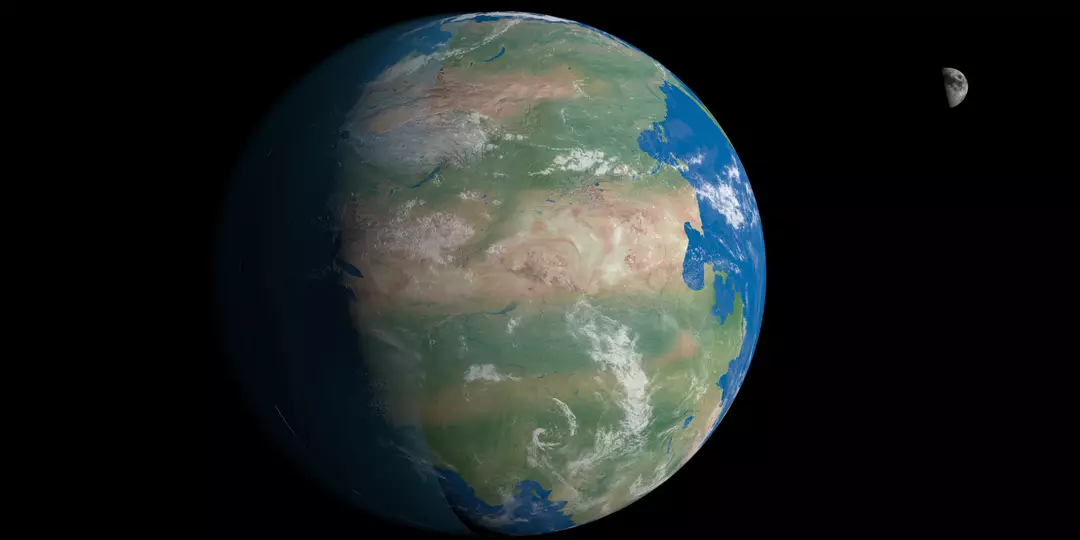
Research from the University of Bristol predicts that all mammals may face extinction in approximately 250 million years due to three significant, unavoidable factors.
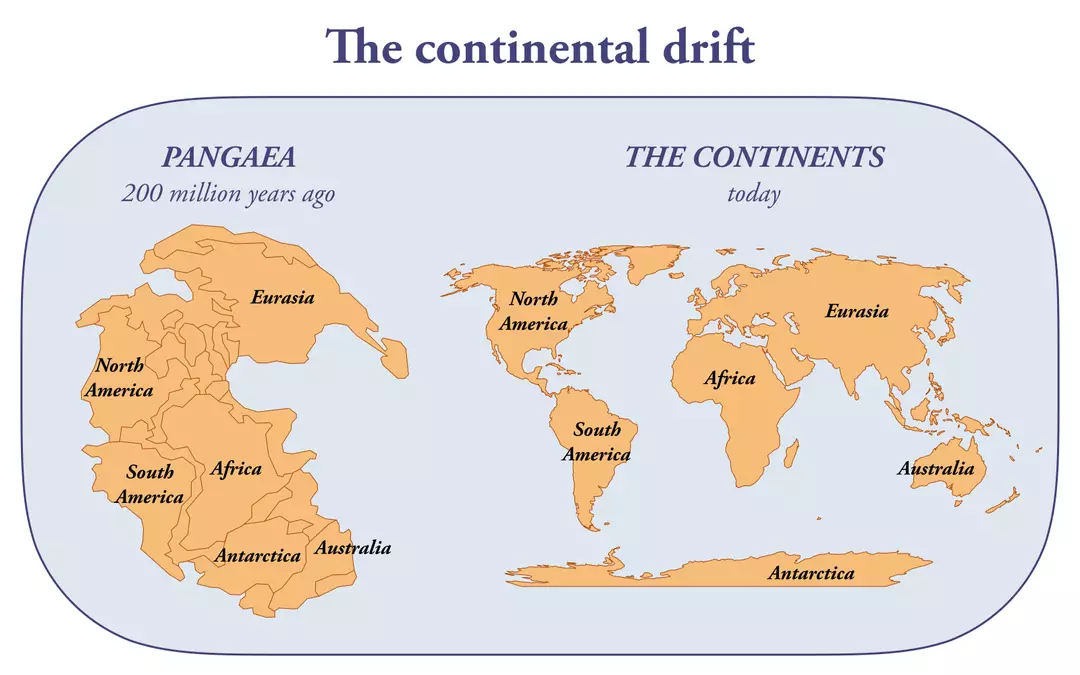
The initial event is expected to occur with the formation of a final supercontinent, known as ‘Pangaea Ultima,’ as continental plates shift, bringing all land masses together.
This geological process will increase volcanic activity, releasing large quantities of greenhouse gases into the atmosphere, resulting in global temperature rises to between 40C and 50C.
Such extreme temperatures would surpass those anticipated if all fossil fuels were combusted, which would still only result in a 12C temperature increase globally.
Mammalian life would be unable to endure such heat conditions.
The study authors noted: “Coupled with tectonic–geographic variations in atmospheric CO2 and enhanced continentality effect for supercontinents, Earth could reach a tipping point rendering it uninhabitable to mammalian life.”
Subsequent to this, a rapid temperature decline could occur, a phenomenon witnessed with prior supercontinent formations, the last occurring 200 million years ago.
This drop in temperatures could lead to ischemic necrosis, eradicating any mammals, including humans, who survive the initial extreme heat and CO2 levels.
Ischemic necrosis occurs when severe cold causes blood vessels to constrict, effectively preserving the warm-blooded animals that remain.
The extreme heat, freezing temperatures, and increased atmospheric carbon dioxide levels form the ‘triple whammy’ of extinction conditions that would render Earth uninhabitable.
Rather than viewing this prediction as reassurance, the study’s authors emphasize the proximity of a potential self-driven mass extinction event.
Dr. Eunice Lo, a Research Fellow in Climate Change at the University of Bristol and co-author of the study, stated: “It is vitally important not to lose sight of our current climate crisis, which is a result of human emissions of greenhouse gases.
“While we are predicting an uninhabitable planet in 250 million years, today we are already experiencing extreme heat that is detrimental to human health. This is why it is crucial to reach net-zero emissions as soon as possible.”